







Self-Talk for Athletes: How to Stop Being Your Own Worst Opponent
Everybody talks to themselves. The question is what the voice says. Here's how athletes catch negative self-talk, rewrite it and use cue words when it counts.

Self-talk for athletes sounds like a soft topic until you actually listen to what you say to yourself after a bad shift. "You're so bad." "Here we go again." "Don't screw this up." You would never let a teammate talk to you like that. You'd probably fight them. But you let that voice run all game, every game, and then you wonder why your legs feel heavy.
Everybody talks to themselves. That part isn't optional. What's optional is what the voice says. And here's the good news: you can train it. Same as your shot. Same as your squat. Let's get into it.
What self-talk actually is
Self-talk is the running commentary in your head. Sometimes it's out loud, a muttered "let's go" on the bench. Mostly it's silent and automatic. You don't pick it. It just shows up.
This isn't just dressing room theory either. Sports psychology researchers have been testing it for decades, and a big 2011 review of the studies found that training your self-talk helps performance. It's not magic. It won't replace your reps. But it's real, it's free, and you have access to it every single play.
Why negative self-talk wrecks your game
A bad thought once in a while isn't the problem. The problem is when it becomes the soundtrack. Here's what it does:
- It steals your attention. While you're roasting yourself over the last play, the next one already started without you.
- It tightens your body. Your brain hears a threat, even if the threat is you. Shoulders go up. Breathing gets short. Your hands stop being your hands.
- It turns one mistake into a story. "I missed" becomes "I always miss" becomes "I'm just not a shooter." One play is now your whole identity.
- It kills your risk taking. When you know you'll get destroyed by your own head for messing up, you stop trying anything that could go wrong.
- It sticks around. Say something to yourself enough times and it stops feeling like an opinion. It starts feeling like a fact.
Hype doesn't work either
Let's kill this right now. The fix is not looking in the mirror and yelling that you're the greatest to ever do it. If you don't believe it, your brain knows you're lying, and now you've got two problems.
The goal isn't positive. The goal is useful. Honest and useful beats fake and happy every time.
"That was a bad pass. Head up next time." That's not positive. It's also not an attack. It's a coach's note, and it gives you something to do on the next play. That's the voice you're building. Think of the best coach you ever had. Honest with you, never against you. Talk to yourself like that.
How to train your self-talk in five steps
- Catch it first. You can't change what you don't hear. Next practice, change nothing. Just listen. Right after, write down the exact words you said to yourself when things went badly. Most athletes have the same three phrases on repeat.
- Rewrite your top three. Take each phrase and turn it into something you can act on. "Don't miss" becomes "pick your spot." "I'm so slow today" becomes "first three steps, hard." "Here we go again" becomes "next one." Say what to do, not what to avoid. Tell your brain "don't miss" and it pictures missing.
- Build a few cue words. Under pressure you don't have time for full sentences. You need one or two words. Use technical cues for skills, like "soft hands" or "head up." Use motivational cues for the grind, like "one more" or "drive." Technical cues tend to help most on precise skills, motivational ones when it's about effort and strength.
- Talk to yourself by name. This one feels weird. Do it anyway. Researchers who study this have found that using "you" or your own name instead of "I" gives you a bit of distance from the emotion. "I can't do this" is a panic. "Alex, breathe, you've been here before" is a coach talking. Same head, very different voice.
- Practice it when it's hard. Pick one phrase a week and use it on the worst reps. Last set. Last sprint. The drill you hate. If the first time you try this is in the third period of an elimination game, it won't be there. It has to be a habit before it can be a weapon.
What to say in the moments that matter
Steal these. Change the words so they sound like you. If it doesn't sound like you, you won't use it.
- Right after a mistake: "Next one."
- Before a big moment: "Breathe. Do your job."
- When you're gassed: "One more shift. Just this one."
- When you're stuck on the bench: "Stay ready."
- When you're in a slump: "Hard work first. Results later."
- After a loss: "What's one thing I can fix this week?"
Notice none of these say you're amazing. They just point you at the next thing you control. That's the whole trick.
Where sisu comes in
People picture sisu as silent. Jaw clenched, no words, just suffering. But go to the end of any hard effort and listen. When your body has nothing left, the voice is what's left. "Keep going" is a sentence, and somebody has to say it to you. Most of the time, that somebody is you.
So you don't build sisu only with the weight on the bar. You build it with what you say when the weight feels impossible. Every time you catch the voice saying "you're done" and answer back with "one more," you get a little harder to break.
One honest note. Being tough on yourself is one thing. If the voice gets dark and stays dark, away from the rink and the gym too, that's not a mindset problem you need to grind through alone. Talk to someone you trust, or to a professional. That takes more guts than staying quiet.
A simple test for this week
- Write down the three things you say to yourself most when it goes badly.
- Rewrite each one as something you can actually do.
- Put the new versions somewhere you'll see them. Your phone, your bag, the inside of your locker.
- Use one of them on purpose at every practice for seven days.
At the end of the week, don't ask if you played better. Ask how long your bad moments lasted. If a mistake used to cost you ten minutes and now it costs you one play, you just got better without touching your technique.
Built for athletes who keep going
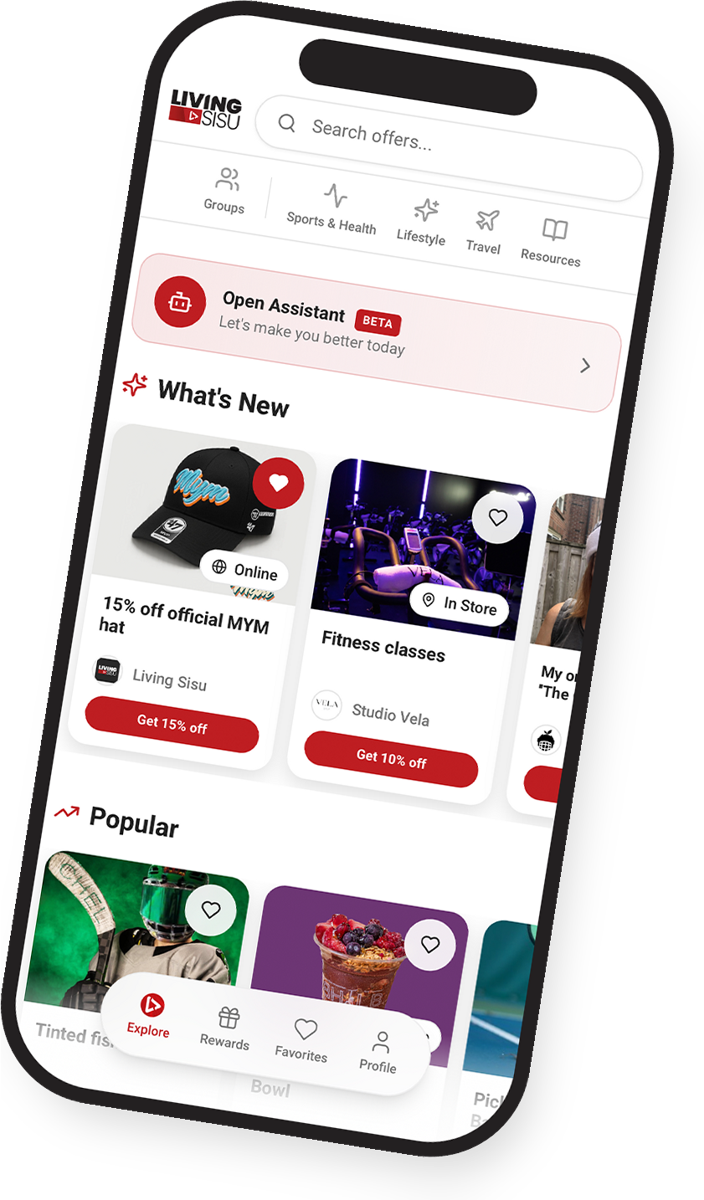
Living Sisu is for the athletes who keep answering back when the voice says quit. The AthleteCard gets you exclusive partner discounts on the gear, food, training and recovery that keep you in the game, plus a community of people who get the grind. It's free to join.
Get your AthleteCard and keep building your sisu.