







Got Cut From the Team? How to Deal With It and Come Back Stronger
Getting cut from a team hurts. Here's how to deal with it, get the real reason from the coach, and build a comeback plan instead of quietly quitting.

Knowing how to deal with getting cut from a team is something nobody wants to learn. But almost every athlete has to. You check the list. You read it twice. Your name isn't there. And suddenly the rink, the gym, the whole sport you've been living in feels like it closed the door on you.
It hurts. It's supposed to. You cared.
But here's what nobody says out loud: getting cut is one of the most common stories in sport. Some of the best athletes you know got cut at least once. The cut didn't decide their career. What they did in the next few weeks did.
Let it hurt first
Don't skip this part. A lot of athletes try to act fine. They laugh it off, say they didn't care that much, tell everyone it's whatever.
That's armor. It's normal. But it doesn't help.
Give yourself a day or two to be disappointed. Be mad. Be sad. Go for a long walk, talk to someone you trust, eat something good. You just lost something you worked for and that deserves to be felt.
What you don't do in those first 48 hours: make big decisions. No "I'm quitting." No angry texts to the coach. No posting about it. Your brain is loud right now and it's a bad time to let it drive.
Separate the cut from who you are
The list said you didn't make this team, this year, with this coach, at this moment. That's all it said.
It didn't say you're not an athlete. It didn't say you'll never make it. It didn't say you're not good enough, forever.
Your head is going to try to turn one decision into a verdict on your whole life. Catch it when it does. A cut is information about a roster. It's not a judgment on your worth.
You got cut. You're not cut out. Big difference.
Go get the real reason
Once the sting calms down a bit, go talk to the coach. Not to argue. Not to change their mind. To learn.
Something simple works:
- "Thanks for the chance to try out." Starts the conversation the right way.
- "What were the two or three things that kept me off the roster?" Specific question, specific answer.
- "What would you need to see from me next time?" Now you're asking for a plan, not pity.
Then listen. Don't defend. Write it down after. Most coaches respect this a lot more than you'd think. Some of them will remember it the next time a spot opens up mid-season.
And sometimes the answer has nothing to do with your skill. Too many players at your position. A need for size. Budget. Politics. That stuff happens. It's not fair, but at least now you know what you're working with.
Build your comeback plan
Here's where the cut actually becomes useful. You now have something most athletes never get: a clear list of what to work on and a real reason to do it.
Turn it into a plan:
- Pick your top two weaknesses. Use what the coach told you, plus your own honest read. Two, not ten.
- Find a place to keep playing. Another team, a lower level, a spring league, drop-in, skills sessions. Reps matter more than the logo on your jersey.
- Set a weekly target you control. Extra sessions, gym days, video, conditioning. Stuff that depends on you, not on a coach's decision.
- Put a date on the next shot. Next tryout, next season, mid-season call-up. Something to aim at.
- Track it. Write down what you did each week. When you doubt yourself, you'll have proof you're moving.
Playing at a lower level isn't a step back if you treat it right. More ice time, more touches, more chances to make mistakes and fix them. Lots of athletes come back from a cut better than the ones who made the team and sat on the bench all year.
Watch out for the quiet quit
The danger after a cut usually isn't quitting on the spot. It's the slow fade.
You skip one session because you're still bummed. Then another. Then the gym feels pointless because "what's the point, I didn't make it anyway." Three months later you realize you haven't trained in weeks.
That's the real loss. Not the cut. The drift after.
If you notice it happening, go back to the smallest possible step. One session this week. One workout. Just show up once. Momentum comes back faster than you think.
If you decide to walk away
Sometimes a cut makes you realize you don't love it the way you used to. That's allowed.
Just make that call when you're calm, not the night of. Give it a few weeks. Talk it through with someone who knows you. If you still want out after that, it's an honest decision, not a reaction. And whatever you learned grinding for that tryout, the discipline, the early mornings, showing up when it was hard, that stays with you.
That's what sisu looks like
Sisu isn't about never getting knocked down. It's about what you do after. Getting cut is one of the hardest hits an athlete can take, because it feels personal and public at the same time.
But the athletes who come back from it carry something different. They know they can take a hit and keep going. They've already been through the worst version of the story and they're still standing.
A year from now, this cut can be the moment you quit. Or it can be the moment you started taking it seriously. You pick.
Keep proof of the comeback
When you're grinding back from a cut, it's easy to feel invisible. Nobody's watching your extra sessions. Nobody sees the progress yet. That's exactly why you need a place to keep it.
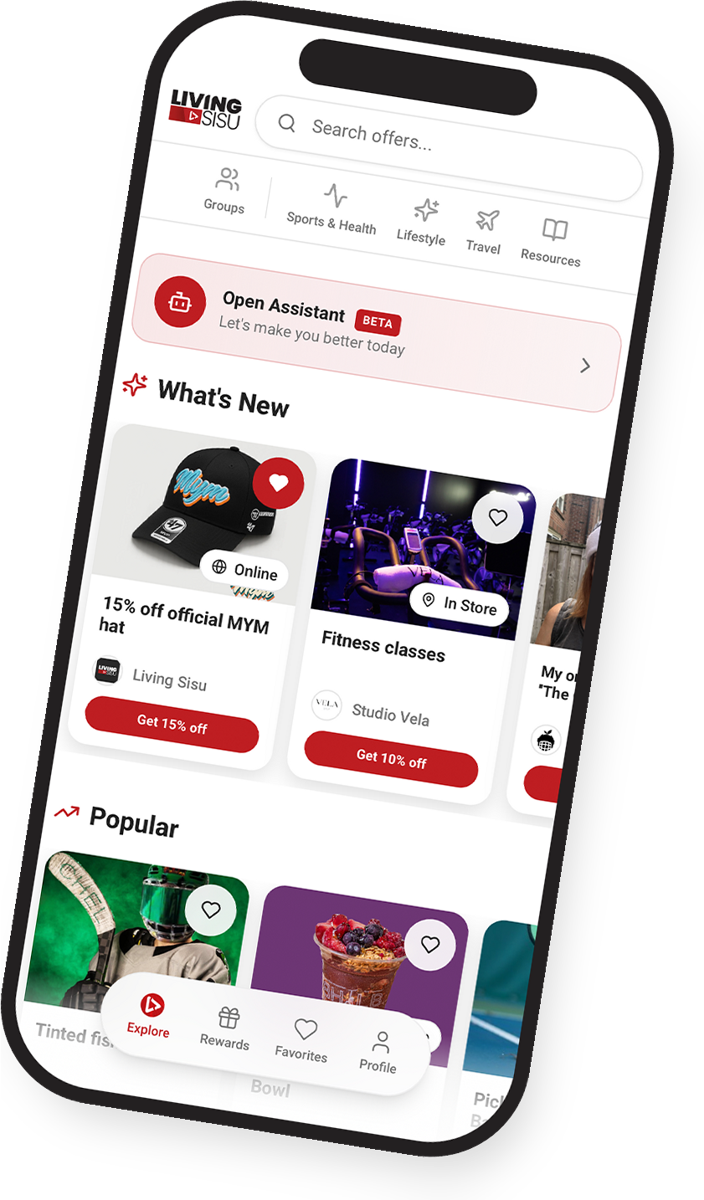
That's what AthleteCard is for. It's your athlete profile in the Living Sisu app: your stats, your journey, your progress, all in one spot. A record that shows the work, even before the roster does.
Build your AthleteCard for free and start writing your comeback.