






How to Come Back From an Injury Without Losing Your Head
Learning how to come back from an injury is mostly a head game. Here is how to build a new scoreboard, attack rehab, stay in the room and rebuild trust in your body.

Nobody tells you that the hardest part of learning how to come back from an injury has nothing to do with your body. Your body has a plan. Tissue heals on a schedule. Your head is the part that goes rogue.
One second you are in the middle of your season. Next second you are on a table, then on a couch, then watching your team from the stands with a bag of ice and a lot of time to think. That gap is where most athletes lose themselves. Not in the rehab. In the waiting.
This is how you get through it without becoming a different person by the time you are cleared.
The first week is a head game
The first days after an injury are loud. Your brain runs every scenario. Will I lose my spot. Will I be the same. Was that my last good season. It spirals fast and it feels very logical while it is happening.
Here is the truth. You cannot answer any of those questions yet. Nobody can. Not you, not your coach, not the doctor. So stop trying to answer them and give yourself a much smaller job: get through today.
Let yourself be pissed off for a bit. Seriously. Athletes who skip that part usually pay for it later, in the middle of rehab, when the anger shows up anyway and they have no idea where it came from. Feel it, say it out loud to someone who gets it, then start moving.
Build a new scoreboard
Your old scoreboard is gone. Minutes played, points, wins, none of that applies right now. If you keep measuring yourself against a scoreboard you cannot touch, you will feel like you are failing every single day.
So build a new one. It should be small and boring and completely in your control:
- Every rehab session done, not skipped, not half done
- Sleep hours, because healing happens while you are unconscious
- Protein and real food, even when you are not burning like you used to
- Range of motion this week compared to last week
- Showing up to the rink or the gym even when you cannot participate
Track it. On paper, in your notes app, wherever. When your season is on pause, the only proof you have that you are still an athlete is the record of what you did today.
Rehab is training. Treat it like it.
A lot of athletes treat rehab like a chore they do between real workouts. That is backwards. Right now rehab is the workout. It is the highest leverage thing you will do all year.
The athletes who come back better are the ones who attacked the boring stuff. Band work. Single leg balance. Isometrics held way longer than felt necessary. The same three exercises, done properly, four hundred times.
Ask your physio the questions nobody asks:
- What is the actual milestone I need to hit before the next phase?
- What can I train right now that will not slow the healing?
- What does a setback look like, so I can spot it early instead of pushing through it?
That last one matters most. Most re-injuries are not bad luck. They are somebody ignoring a signal because they were tired of waiting.
Train everything you are allowed to train
An injured ankle is not an injured everything. Too many athletes shut down completely for six weeks and then come back soft on top of being rusty.
You almost always have something. Upper body if it is a leg. Core work in positions that do not load the injury. Bike or pool if you are cleared for it. Grip, neck, whatever is left. It keeps your body honest and it keeps your identity intact, which is the part people underestimate.
And do the mental reps. Watch film of yourself from before. Watch your position, not the whole game. Visualize your reads. It sounds soft until you realize the brain does not fully separate rehearsed movement from real movement. You can keep your timing alive from a chair.
Stay in the room
The instinct when you are hurt is to disappear. Practices hurt to watch. Group chats feel like they are happening in a different world. So you drift, and by the time you are cleared you feel like a stranger on your own team.
Do the opposite. Be at practice. Sit on the bench. Talk to teammates about their game. Help the younger guys with something you are good at. You will hate it for the first week and then it will start feeling normal again.
Injured athletes who stay connected come back faster socially, and that matters more than people admit. Coming back is not just being medically cleared. It is walking back into a room that still feels like yours.
The comeback trap
Here is where good comebacks fall apart. You get cleared, you feel physically fine, and you go full speed with a head that does not trust the body yet. So you play tight. You hesitate on the one movement that hurt you. You look slow and you have no idea why.
That is normal and it is fixable, but only if you name it. Give yourself a ramp:
- First week back: full effort on everything except the movement that scares you
- Second week: attack that movement on purpose, at controlled speed, over and over
- Third week: stop thinking about it and just play
Trust comes back through reps, not through time. You have to actually do the thing that hurt you, in a safe setting, until your body stops flinching.
What the injury gives back
Nobody wants to hear that an injury can be useful. It usually is anyway.
You find out who checks in on you. You find out how much of your identity was tied to performing versus to the work. You fix the weak link you had been ignoring for two years. You learn to be patient, which is a skill you will use for the rest of your career.
Sisu is not the highlight reel. Sisu is the ninth week of rehab, alone in a corner of the gym, doing the boring exercise correctly when nobody would know if you cheated it. That is the part that actually builds you.
You will come back. The question is what kind of athlete walks back in.
Do not do it alone
Recovery costs money. Physio, tape, supplements, gym access, the drive to appointments. It adds up fast at the worst possible time.
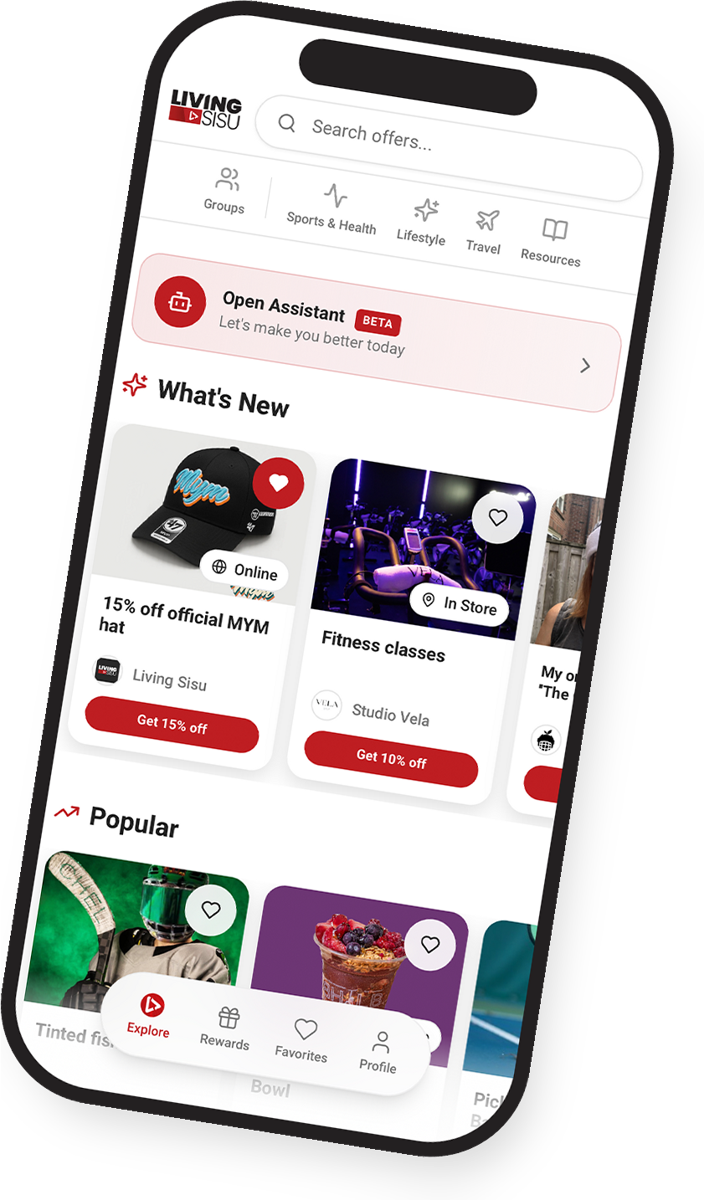
The AthleteCard is free, and it gets you real deals on the stuff that keeps you going: gear, gyms, nutrition, recovery and travel, plus a community of athletes who have been exactly where you are right now.
Get your free AthleteCard and stop paying full price to get back on the ice.