







How to Stop Overthinking in Sports (And Just Play)
Overthinking is a habit, not a personality trait. Here is the five-second reset athletes use to get out of their head and back into the play.

If you want to know how to stop overthinking in sports, start here: the problem is not that you think too much. The problem is when you think. You think during the play. And the play does not wait for you.
You know the feeling. The puck comes to you, the ball is in the air, the whistle goes, and instead of moving, your brain starts a meeting. What if I miss. Coach is watching. Last time I tried this it went bad. By the time the meeting is over, the moment is gone. Someone else made the play.
Overthinking is not a personality trait. It is a habit. And habits can be trained out of you the same way they got trained in.
Why athletes overthink in the first place
Nobody overthinks a drill they have done ten thousand times. You overthink when something is on the line. A tryout. A scout in the stands. A coach who just yelled at you. A bad game last week that is still sitting in your chest.
Your brain is trying to protect you. It does not want you to look stupid, so it tries to control every detail. The issue is that sport happens faster than conscious thought. Your body already knows what to do. Your brain keeps interrupting it to double check.
That is why the best version of you shows up in practice, with your friends, when nobody is watching. No stakes, no meeting, just play.
Thinking belongs in practice, not in the game
Here is the mental shift that changes everything. There are two modes. Training mode and playing mode.
In training mode you are supposed to think. Break the skill down. Fix your footwork. Film yourself. Ask why. That is where the analysis lives.
In playing mode, you are not supposed to think at all. You react. You trust whatever you built in training mode. If the skill is not there yet, you will not fix it mid-game by thinking harder. You will only get slower.
Most athletes who overthink have the modes backwards. They coast in practice and panic in games. Flip it. Grind in practice. Let go in games.
How to stop overthinking in sports: the reset
You will never fully stop the thoughts. Nobody does. What you can do is catch them faster and get back to the play. That is the whole skill. Here is a simple reset you can run in under five seconds, anywhere on the field or ice.
- Notice it. The second you catch yourself in a mental meeting, name it. "Thinking." That one word pulls you out of the loop.
- Breathe out. One long exhale. Not in, out. The exhale slows your heart rate and gets you back in your body.
- Pick one cue. Give your brain one job. "See the ball." "Move your feet." "Next shift." One thing only. The brain cannot overthink when it has a single task.
- Go. Do the next simple thing in front of you. Not the whole game. Just the next play.
That is it. Notice, exhale, cue, go. It sounds too simple. It is supposed to be simple. Complicated tools do not work when your heart is at 170.
Build a cue word before you need it
The cue is the part most athletes skip. They wait until they are already spiralling and then try to invent something calming. Too late.
Pick your cue word in a calm moment. It should be short, physical and about action. Not "relax." Not "don't mess up." Those are thoughts about thoughts. Something like "feet," "attack," "quick," "shift." Say it in practice when you reset. Say it on the bench. Say it in warm up. The more you use it when nothing is on the line, the faster it works when everything is.
Lower the stakes on purpose
Overthinking feeds on importance. The bigger the moment feels, the louder the meeting gets. So shrink the moment.
You are not playing for your future. You are playing the next ten seconds. The scout does not matter for the next ten seconds. The last mistake does not matter for the next ten seconds. Your parents in the stands do not matter for the next ten seconds.
Ten seconds, then another ten. That is how a whole game goes by without a single meeting.
Make mistakes boring
A big reason you overthink is that you treat mistakes like emergencies. You fumble a pass and your whole body reacts like something went seriously wrong. That reaction is what triggers the next meeting.
Flip it. A mistake is information. You missed, you note it, you move. No drama. Watch the best players after they screw up. Nothing on their face. They already moved on. That is not because they do not care. It is because they decided a long time ago that one mistake is not worth the next three plays.
Practice this in training. Mess up on purpose sometimes. Get used to the feeling of a bad rep that does not become a bad day.
Where sisu fits in
Sisu is usually talked about as grit. Pushing through. Not quitting. But there is a quieter side to it. Sisu is also the discipline to stop fighting yourself.
The athlete who overthinks is fighting themselves every shift. That is exhausting, and it is not toughness. Real toughness is trusting the work you did and letting the game be the game. It takes guts to stop controlling. Most people never get there because it feels like letting go. It is. That is the point.
What to do this week
- Pick your cue word today. Write it on your tape, your water bottle, wherever you see it.
- Run the reset in every practice this week. Notice, exhale, cue, go. At least ten times a session.
- After your next game, count your meetings. Not your mistakes, your meetings. The moments your brain took over. Aim to cut that number next time.
- Move your analysis to after the game. Twenty minutes, honest, then close it.
You will still overthink sometimes. Everyone does. The difference is how fast you get back. A good athlete recovers in a period. A great one recovers in a shift. Train that gap and the rest of your game gets quieter on its own.
Stop overthinking what you pay for too
Here is the thing nobody tells you about sport. The mental grind is not the only thing draining you. The cost is too. Gear, ice time, gas, gym, the food that fuels all of it. Every dollar you stress about is one more meeting in your head you do not need.
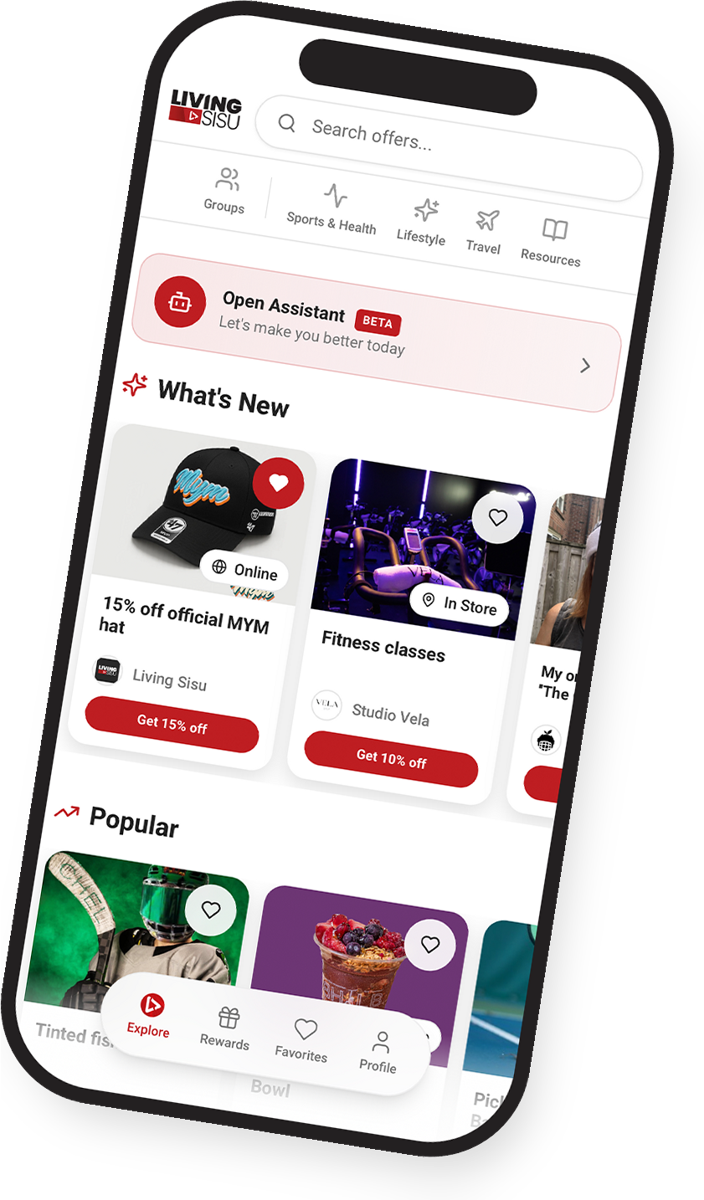
That is why we built the AthleteCard. One card, real discounts on the stuff athletes actually buy, from partners who get the grind. Less stress on the bank account means more room in your head for the game. It is free.
Get your free AthleteCard here. Then go play. Stop thinking.