








What to send your athletes when you represent them
Athlete agency communication that gets read: private email invites, camp prep and interview resources, an announcement room, equipment and physio partners, junior, pro and retired tiers.

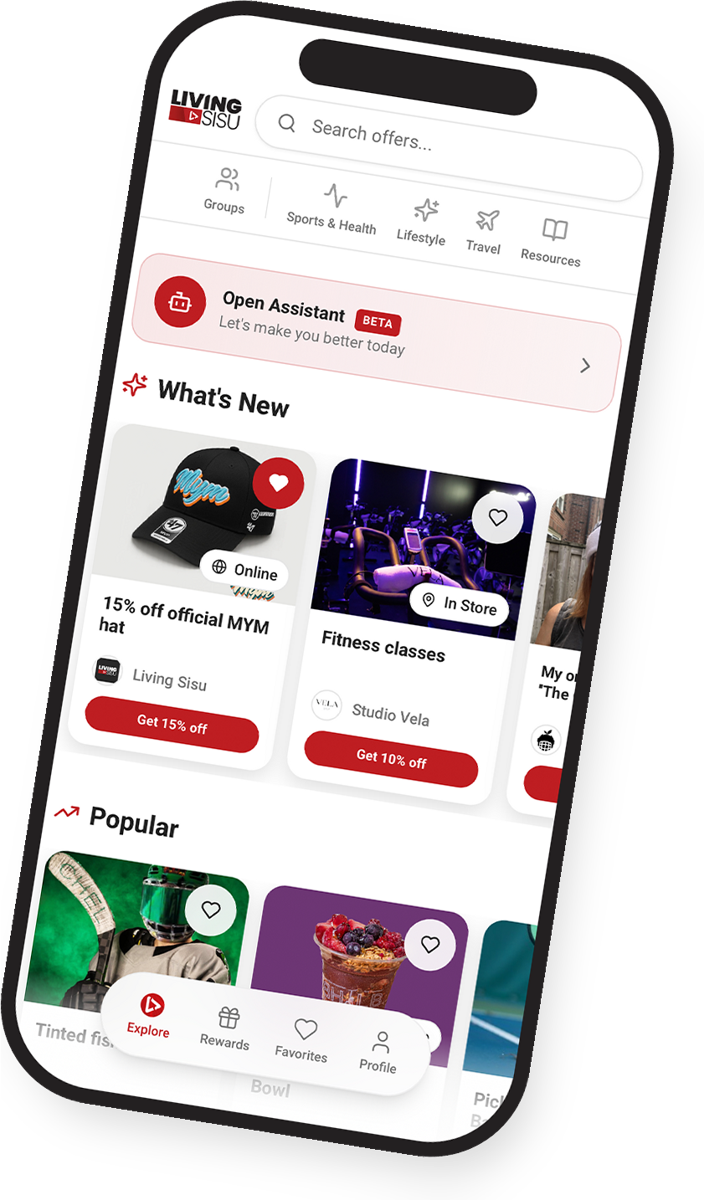
The 19-year-old you signed last spring has a camp in eleven days and has not read one of your emails. Not because he does not care. Because he is 19, his phone has 40 unread threads and yours looks like the one from his billet family. Athlete agency communication has one job: get the right information in front of the right athlete before the moment it matters. Here is what to send your athletes, and how a player agency does it with a private group in the Living Sisu app.
Not a public QR code. A personal email, one athlete at a time.
A team prints its QR code and tapes it to the dressing room door. An agency does the opposite. Your group is private: nobody scans in from a poster, nobody finds a code online. On Premium and Pro you choose how members join, and you set it to email invitation only. Every athlete gets a personal invitation sent from my.livingsisu.com, with a message written for him or her, and joins from that email into their own AthleteCard.
That matters for two reasons. First, the athlete opens an invitation from the agent who signed him, not a generic sign-up form. Second, the group stays what it should be: your clients, your alumni, nobody else. On the dashboard you see how many joined from email invites and how many opened the group this week, without ever seeing a last name, an email or a photo.
Resources: the three documents every athlete asks for at the worst time
Everything you have already answered by text at 11 pm belongs in Resources: text, images, PDFs, visible to the tier you choose.
- What to know before a camp. A one-page PDF per camp type: what to pack, arrival day, who the coaches are, what the staff is evaluating, what not to say to media, when to call you. Updated once a year, seen by every junior client in the group.
- How to prepare an interview. The three questions they will get, the answer structure you want, what to wear, the two topics to avoid. A 16-year-old who reads this the night before sounds like a pro the next morning.
- Documents to provide. The list: passport copy, medical records, school transcripts, visa paperwork, equipment sizes, banking details for expense reimbursements. With a deadline. In the format you want.
Add the ones specific to your agency: the contract explainer for parents, the social media guidelines, the nutrition basics from your dietitian, the off-season training plan. On Pro, resources are unlimited, so nothing has to be cut.
Why a PDF in the app beats a PDF in an email
The email is read once and lost. The resource sits in the same app the athlete opens for the training link and the equipment discount, and it is still there in March. When you update it, everyone has the new version without a resend.
An announcement room where only you write
Chat on the Pro plan gives you discussion rooms and an announcement room. In the announcement room only the owner posts. Use it for the things that must not get lost: "Camp invitations go out Monday, check your resources", "New equipment partner, 25% on skates, the offer is in this message". You can drop an offer straight into the conversation, so the athlete taps once and has the code.
Discussion rooms are optional. Some agencies open one for junior clients to trade camp tips, one for parents, one for alumni. Others keep it announcements only. The point is that the announcement room is not a group text with 60 people replying "thanks".
Partners: equipment, training, nutrition, physio
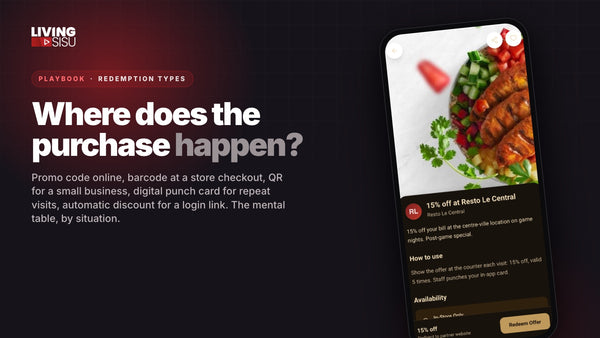
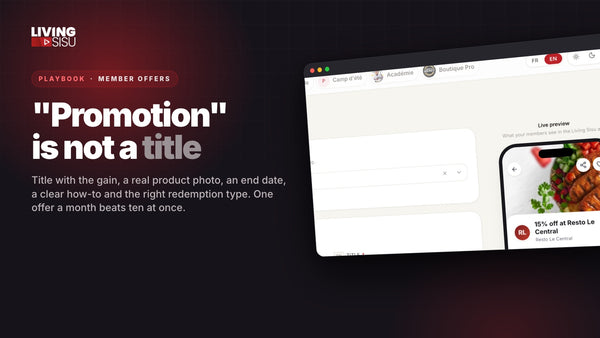
Your athletes already buy skates, gym memberships, supplements and physio sessions. You already know the good suppliers. Enter them as partners in the group, each with an offer reserved for your clients: a promo code, a barcode at the counter, an automatic discount.
- Equipment. A pro shop or a brand rep with a client price on sticks, skates, protective gear.
- Training. The off-season strength coach, the skating specialist, the goalie coach: a client rate on packages.
- Nutrition. A dietitian consult, a meal prep service, the supplement supplier you actually trust.
- Physio and recovery. First assessment at a client rate, priority booking in season.
Two things happen. The athlete gets a real advantage from being your client, a retention argument you can put on the table when a rival agency calls. And if the supplier pays a commission on client purchases, the group pays for itself: 60 clients, 30% use the equipment offer over a season, $400 average, 15% commission = $1,080 on one partner. Nobody in the group pays anything; members never pay to be in a group.
Tiers: junior, pro, retired
A 16-year-old heading to a draft camp, a 27-year-old on a two-way contract and a 38-year-old who retired last year need three different feeds. Member tiers on Pro let you sort them and choose who sees what:
- Junior: camp prep, interview prep, school documents, parent resources, junior league deadlines as events.
- Pro: contract calendar, tax and relocation documents, media guidelines, the physio network in each city.
- Retired: transition resources, the alumni discussion room, the events where you want them in the room mentoring the juniors.
A prospect's mother does not see the pro tax guide. A retired defenceman does not get the draft camp packing list. Everyone sees what applies to them, and nothing else.
Deadlines as events
Draft registration, combine dates, visa appointment windows, the agency's summer skate, the annual family dinner. Events carry a date, a time, a place, a map, a price when relevant and a registration button. The athlete sees the next date on the card; you see who registered.
Useful links and administrators
Useful links are the five things you resend every week: the training schedule, the league portal, the travel booking form, the expense form, the media kit upload. Put them in the app once.
Administrators get delegated access with permissions chosen one by one. The junior scout can post events for the junior tier only. The assistant who handles documents can update resources and nothing else. You keep the keys and the announcement room.
What the dashboard tells an agent
Opens per day, so you know if the camp prep PDF got read before the camp. Most-viewed content, so you know what your athletes actually care about. Where members came from, which for an agency should read 100% email invites. The counts, never the identities. If the group is not being opened, the answer is not another email; it is a better resource and a partner offer worth opening the app for.
FAQ
Can athletes from other agencies find or join the group?
No. You use no public QR code and no public code. Each athlete joins from a personal invitation email you send from my.livingsisu.com. You control the list.
Do athletes pay for anything?
Never. Members never pay to be in a group. The agency pays for the plan, and partner commissions usually cover it.
Which plan does an agency need?
Tiers, chat with the announcement room, unlimited resources and admins are on Pro ($2,000/year). An agency with a handful of clients can start on Free with 5 resources and a few partners, then move up.
Create your group
Write the camp prep PDF once. Invite your first ten athletes. Go to my.livingsisu.com, create your group and stop answering the same question at 11 pm.