







How to run a loyalty program for a card shop
One point per dollar, a digital punch card that never goes through the wash, rewards that cost you almost nothing, and a QR on the counter. The setup, step by step.

The punch card is in the wash. Again. Your best customer, the guy who drops $80 every Friday on hobby boxes, just lost his ninth punch and he is a little annoyed. That is the whole problem with a loyalty program for a card shop run on cardboard: the people who spend the most are the ones who lose the most. A digital points program fixes that in an afternoon, and it costs you nothing beyond the products you were already giving away.
Why a card shop needs a loyalty program at all
Card shops live on repeat visits. Nobody buys a single pack and disappears. Your regulars come back for the Friday drop, the Tuesday trade night, the pre-release, the Pokémon restock. The store across town sells the same boxes at the same price. The only thing that keeps a collector in your shop instead of the other one is the relationship, and a loyalty program is that relationship written down.
The old way works until it doesn't. Paper cards get lost, forgotten in a wallet, punched twice by a nice employee. You have no idea who your top 20 customers are. And when you want to tell everyone about a release, you post on Instagram and hope.
Set up the program in a group your shop owns
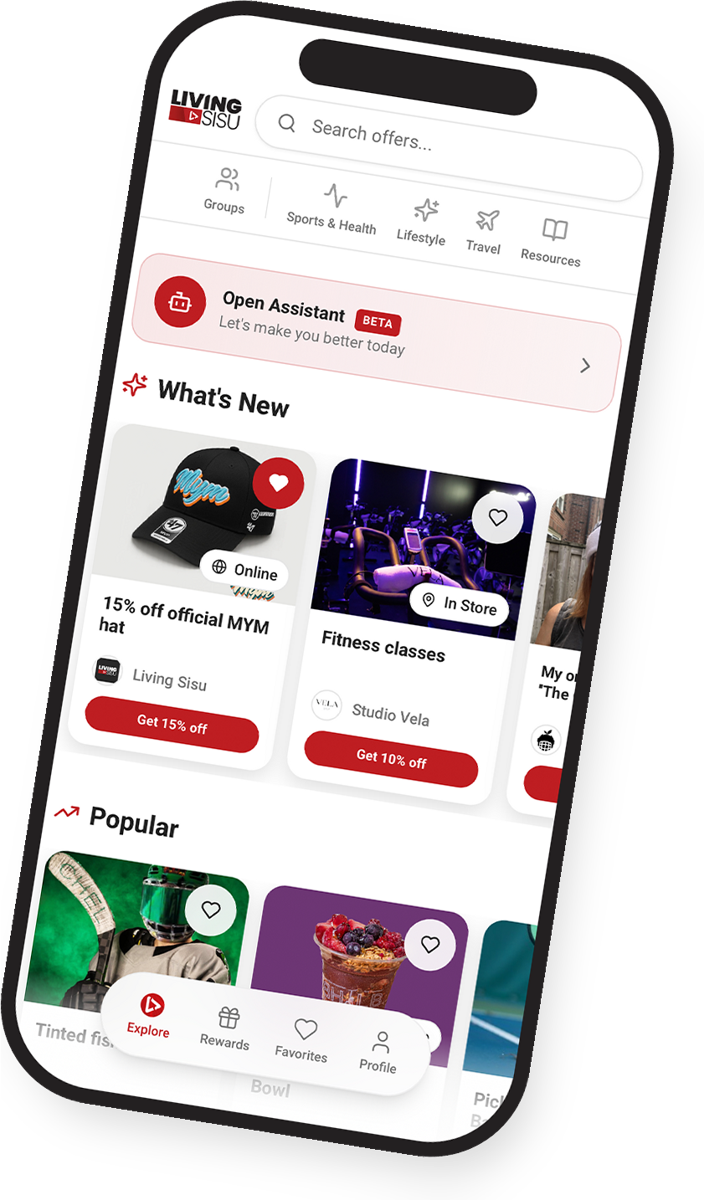
With Living Sisu, your shop gets a group in the app. Customers open it from their AthleteCard, free for them, always. You run everything from my.livingsisu.com. Loyalty points come with the Pro plan ($2,000 a year, Canadian dollars), and the program carries your shop's name, not ours. Members never pay to be in a group.
Here is the setup, step by step.
- Create your group on my.livingsisu.com. Name it after the shop, upload your logo, write two lines about what you sell.
- Turn on loyalty points and choose how people earn them. Start simple: one point per dollar spent in store.
- Build the reward catalogue. Three to five rewards, cheap for you, exciting for them. More on that below.
- Print the QR code. The share page gives you a high-resolution QR. Put it on the counter, and drop a small one in every bag.
- Scan the member's card at checkout. The customer shows the card on their phone, you scan it, points go in. Ten seconds.
- Post your first offer so the group is not empty on day one. Early access to a release is a good first one.
- Check the stats after two weeks and adjust the earning rules or the rewards.
One point per dollar, and keep it that simple
Collectors are good at math. If you make the rules complicated (double points on Tuesdays, triple on sealed product over $150, none on singles), they will find the loophole or they will stop caring. One point per dollar is easy to explain at the counter and easy to remember in the car.
Example. A regular spends $60 a week. That is 60 points a week, around 240 a month. If your first reward sits at 250 points, he reaches it in about a month, which is exactly the right rhythm: often enough to feel real, rare enough to cost you almost nothing.
The digital punch card, for shops that prefer visits
If you'd rather reward visits than dollars, the digital punch card does that. Ten visits, one free pack. The card lives in the app, it can't go through the wash, and it can't be punched twice by accident. Some shops run both: points for spending, punches for showing up at trade night.
Rewards that cost you little and mean a lot
The mistake is to think a reward has to be a discount. Discounts cost you margin on every redemption. The best rewards in a card shop are the ones that cost you almost nothing but that a collector can't buy anywhere:
- Early access to a release. Members with 500 points get in the door 30 minutes before the public on drop day. Costs you zero. Feels like VIP.
- A free product. One booster pack (around $4 for you) at 250 points. A regular has to spend $250 to get there.
- A reserved spot at a pre-release or a tournament that always sells out.
- Free sleeves or a pack of top loaders with a purchase. Small, useful, cheap.
- A slot in a box break. One spot in a group break at 1,000 points. The excitement is the reward.
Put the cheap reward low (250 points) so people taste it fast, and the exciting one high (1,000 or more) so they keep coming. And keep the catalogue short. Three rewards people understand beat ten they scroll past.
The scan at the counter is the whole habit
A loyalty program only works if it becomes a reflex on both sides. The customer pays, pulls out the phone, you scan the member's card, done. If you skip it on busy Fridays, the program dies in a month.
Two things help. First, train every employee on day one: the scan is part of the transaction, same as the receipt. Second, put the QR on the counter facing the customer, with four words: "Scan. Join. Earn points." When someone asks what it is, the answer is "you get points every time you buy here, it's free." Nobody says no to that.
The QR in the bag catches the ones who were in a hurry. They get home, open the bag, see the code, and join from the couch. Your stats will tell you how many come from the counter and how many from the bag, so you know which one to print bigger.
Bring your partners into the program
This is where a card shop's group becomes more than a points card. Your group also holds Offers and Partners. The offers come from your own partners, the businesses you already know: the grading service you send cards to, the pizza place next door on tournament nights, the online marketplace you sell singles through. Each partner takes about two minutes to enter.
Here's the money side. Say you have 250 members. A partner gives your members 15% off and pays you a 20% commission on their purchases. If 20% of members buy once with a $100 basket, that's 50 buyers, $5,000 in sales and $1,000 back to the shop on a single offer. The Pro plan is $2,000 a year. Two offers like that and the program has paid for itself, before you count a single extra booster sold.
What you see in the stats, and what you never see
From my.livingsisu.com you get openings per day, where members came from (QR, code, link or email), the most viewed content and the tracked share links. If openings jump the day you post a restock, you know your posts are landing. If the counter QR brings three times more members than the bag QR, print it bigger and stop worrying about the bag.
One thing you never see: the member's last name, email or photo. On any plan. Collectors care about privacy, some of them hold cards worth a lot of money, and being able to say "we don't even see your email" is a trust argument at the counter, not a limitation.
FAQ
Do my customers need to pay or download something?
They never pay. They scan the QR, get a free AthleteCard, and your shop's group opens inside it. That's it.
What if I start on the Free plan and upgrade later?
Free gives you 5 offers, 5 resources, 5 events and 2 useful links, enough to start posting releases and building the member list. Loyalty points come with Pro. If you ever move down a plan, nothing is deleted: the extra content is archived and your printed QR codes keep working.
Can an employee handle the scanning without full access?
Yes. On Pro you can add unlimited administrators with the permissions you choose, so an employee can scan cards and add points without touching your offers or partners.
Create your group
The next punch card that goes through the wash is one you'll never have to replace. Set up your shop's group, print the QR, and scan your first member this week. Create your group on my.livingsisu.com.