







How much money can a sports team make from member perks
One partner offer on a 250 member group is worth about $1,000 a season. Here is the math at 2, 3 and 5 partners, what it pays for, and what moves the buy rate.

Somewhere between zero and a lot, and the difference is math you can do on a napkin. Money from member perks is the question every team manager asks, expecting a vague answer. Here is a precise one: one partner offer, on a group of 250 people, is worth about $1,000 a season. Everything else in this article is that number multiplied.
The base calculation
Take a real group. A junior team, a women's university program, a minor hockey association with a couple of age groups. Players, parents, staff, alumni, the fans who show up every week. Call it 250 members with the group open on their AthleteCard.
Now a partner. The sports shop ten minutes from the rink gives your members 10% off and pays your group a 20% commission on what members spend. Here is the season:
- 250 members
- 20% of them use the offer at least once: 50 buyers
- Average basket: $100 (a stick, tape, a sharpening, a pair of gloves)
- Sales generated for the shop: $5,000
- Commission back to your group at 20%: $1,000
$1,000 per offer, per season. That is the unit. Memorize it, because every conversation with a partner and every plan decision comes back to it.
Why 20% buying is a conservative number
You are not asking members to buy something new. You are asking them to buy what they already buy, at a place that gives them a deal, because it sits in the app they open for the schedule. A parent who was going to buy tape anyway and sees "10% at the sports shop" on the way to the bus link is not being sold to. A 20% conversion on that kind of offer is a floor, not a ceiling.
Two, three and five partners
Nobody stops at one partner. The post-game restaurant, the garage, the physio clinic, the pizza place: each one is a separate offer with its own commission. Same 250 members, same 20% who buy, same $100 basket, same 20% commission:
- 2 partners: $2,000 a season. A restaurant and a sports shop. Enough to cover the Premium plan ($990/year) twice.
- 3 partners: $3,000 a season. Add the garage. The Pro plan ($2,000/year) is paid, with $1,000 left for the team.
- 5 partners: $5,000 a season. Add the physio and the pizza place. Now you are funding a tournament trip, or new goalie gear, with deals your members are happy to use.
Not every partner pays out the same. The garage basket is $200 and the pizza basket is $30. But the average across five holds up, and that spread is exactly why you want more than one.
A worked example with different baskets
Say a women's university team with 250 people in the group:
- Restaurant: 60 buyers, $40 average, $2,400 in sales, 15% commission = $360
- Sports shop: 50 buyers, $100, $5,000 in sales, 20% = $1,000
- Garage: 30 buyers, $250, $7,500 in sales, 15% = $1,125
- Physio: 25 buyers, $90, $2,250 in sales, 20% = $450
- Coffee shop punch card: 80 buyers, $25, $2,000 in sales, 10% = $200
Total: $19,150 in sales sent to five local businesses, $3,135 back to the team. And the businesses paid nothing up front.
What it pays for
Plans are billed yearly, in Canadian dollars. Free is $0 with 5 offers, 5 resources, 5 events and 2 useful links. Premium is $990/year: 12 of each, 1 admin, full stats, tracked share links, a custom invitation email. Pro is $2,000/year: everything unlimited, unlimited admins, chat, member tiers, loyalty points.
Line that up against the math:
- One partner on Free: $1,000 in, $0 out. Pure profit for a team that has never made a dollar from its own community.
- Two partners on Premium: $2,000 in, $990 out. The plan pays for itself, you keep $1,010, and you get full stats to show partners.
- Three partners on Pro: $3,000 in, $2,000 out. Paid, with chat, tiers and a loyalty program you run in your team's name.
The plan is not a cost. It is a line the commissions cover, and the more offers you unlock, the more partners you can carry.
What makes the buy rate go up
The 20% is not fixed. It moves. Here is what pushes it up:
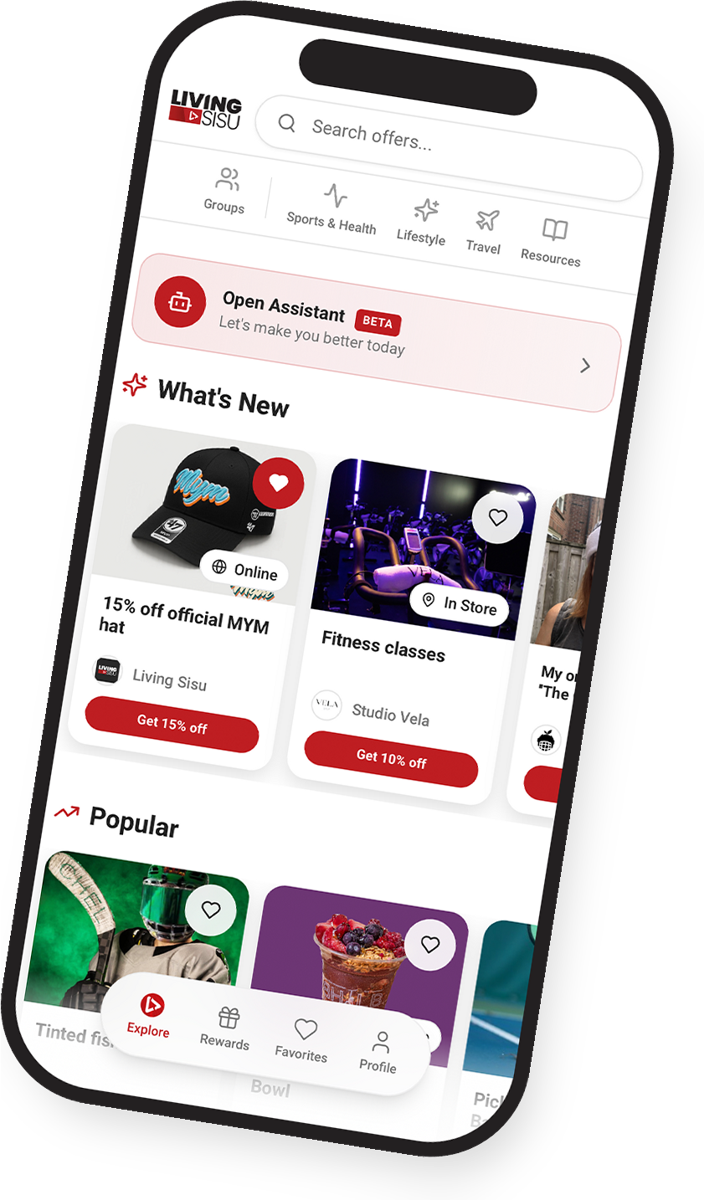
- Everything in one place. The offers live next to the schedule, tickets, tournament dates and useful links. Members open the app for the practice time and see the deal. An offer in a separate email is buried by Tuesday.
- Deals that match real habits. Post-game restaurant, tires before winter, skate sharpening. Nobody needs convincing.
- An easy redemption. A barcode at the register or an automatic discount beats "mention this email". A digital punch card gets used again and again.
- Announcements. On Pro, the announcement room lets you drop an offer straight into the conversation: "Home game tonight, 15% at Marco's after". Buy rate jumps on game day.
- Loyalty points. Members earn points in your team's name for using offers and redeem them from your catalogue. People chase points.
- A bigger group. 400 members instead of 250 is $1,600 per offer instead of $1,000. Print the QR code, put it on the bench, in the pro shop, on the team page.
What makes it go down
- Deals nobody wants: 5% off a $1,000 item, or a business 45 minutes away.
- A group nobody joins because the QR code is on a poster in the office instead of at the rink entrance.
- Offers that expire and never get replaced. Check the dashboard: if an offer has not been opened in a month, swap it.
- Friction at the counter. If the cashier does not know about the deal, members stop trying.
Track it, then ask for more
Your group's dashboard shows opens per day, which offers get viewed most, where members came from (QR, code, link, email) and, on Premium and Pro, the clicks and sign-ups on each share link. That is the number you bring to each partner at the end of the month: "your offer was opened 410 times and redeemed 63 times". Partners who see numbers renew, and they raise the commission when they see the sales.
One thing on trust: you never see your members' last name, email or photo, on any plan. You see the counts. Members join because it costs nothing and their data stays theirs.
FAQ
Does the team pay the partners, or the other way around?
The other way around. The partner gives your members a deal and pays your group a commission on what they buy. You add the partner yourself in two minutes; the deals come from the businesses you already know.
Do members pay to get the perks?
Never. Members open your group from their free AthleteCard. The only cost is the group plan, and the commissions cover it.
What if my group is only 80 people?
Same math, smaller: 80 members, 20% buy, $100 basket, 20% commission = $320 per offer. Three partners is $960. Start on Free, grow the group with the QR code, and the number follows.
Create your group
Do the math with your own numbers, then go to my.livingsisu.com, create your group and add your first partner. The first $1,000 is one conversation away.